
Last updated November 14, 2026
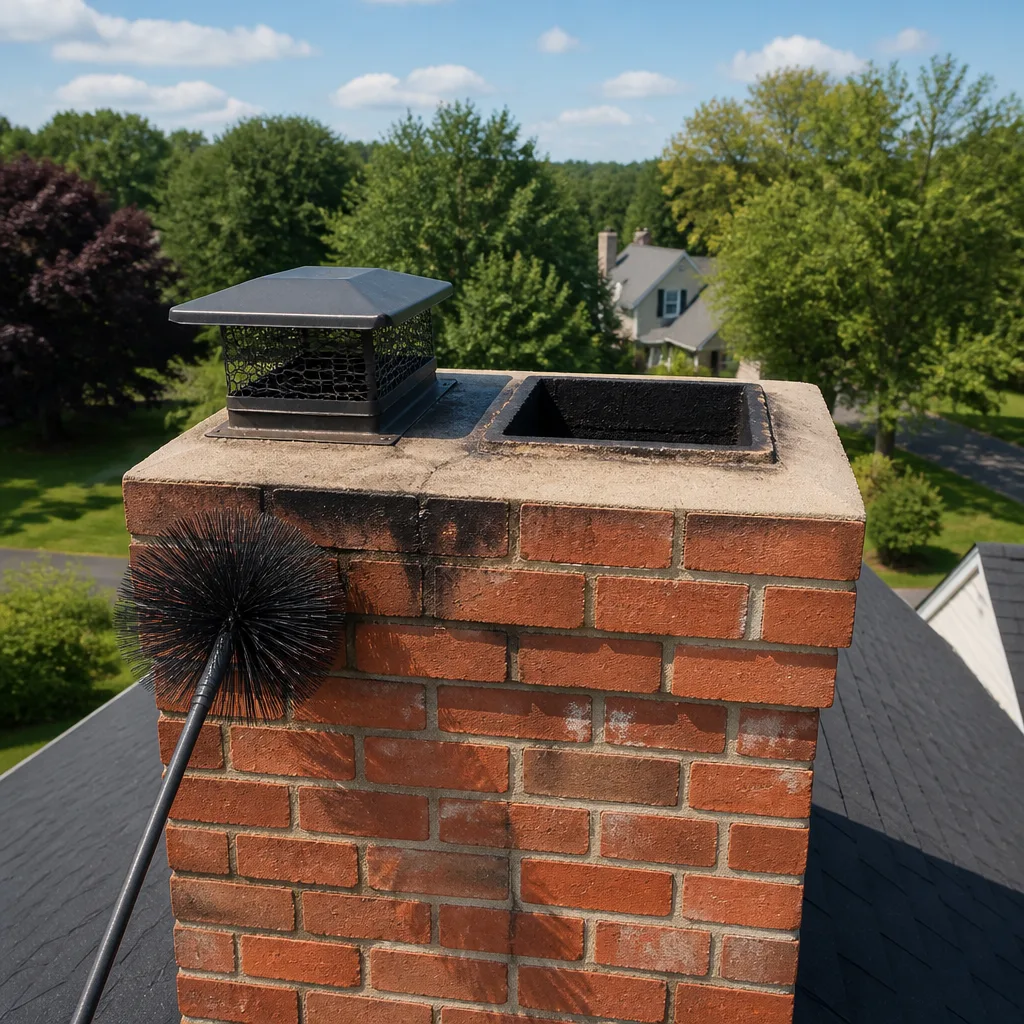 Sweep & inspection
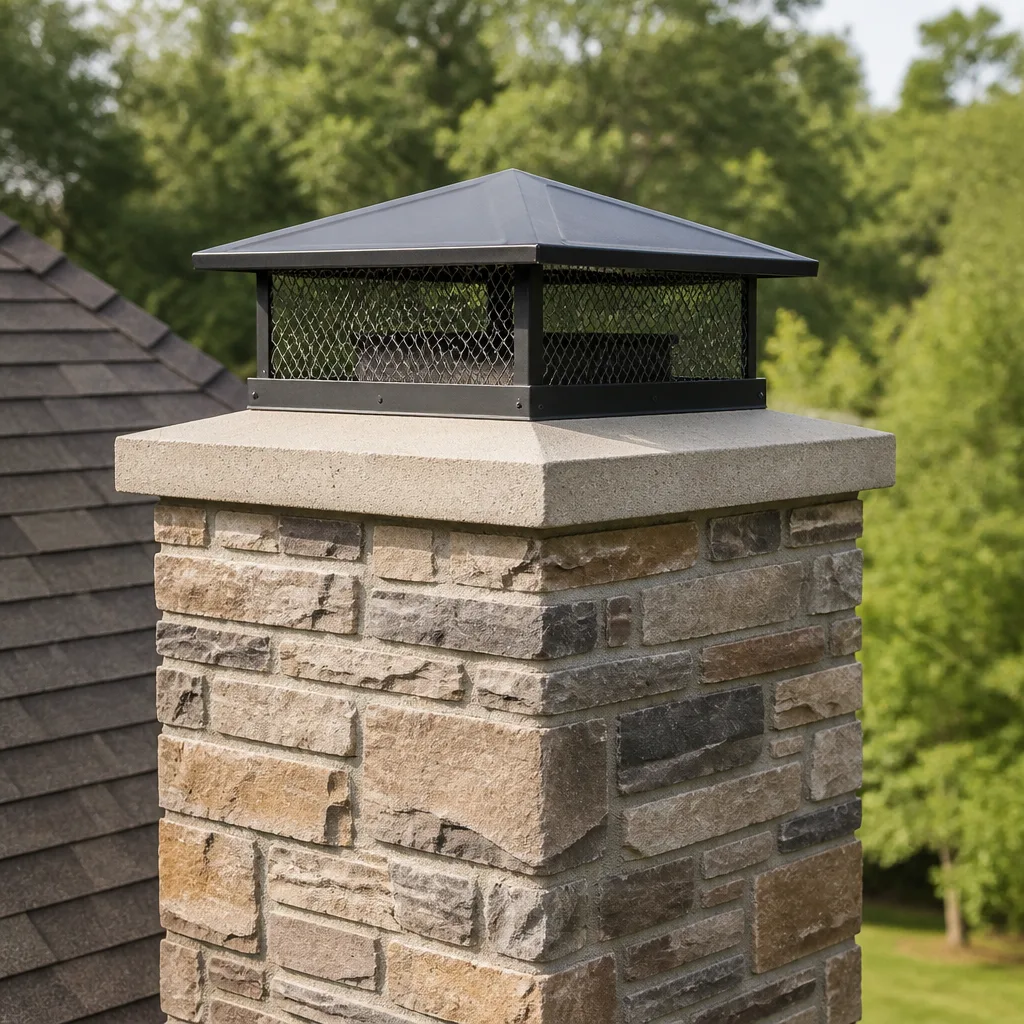 Caps & crowns
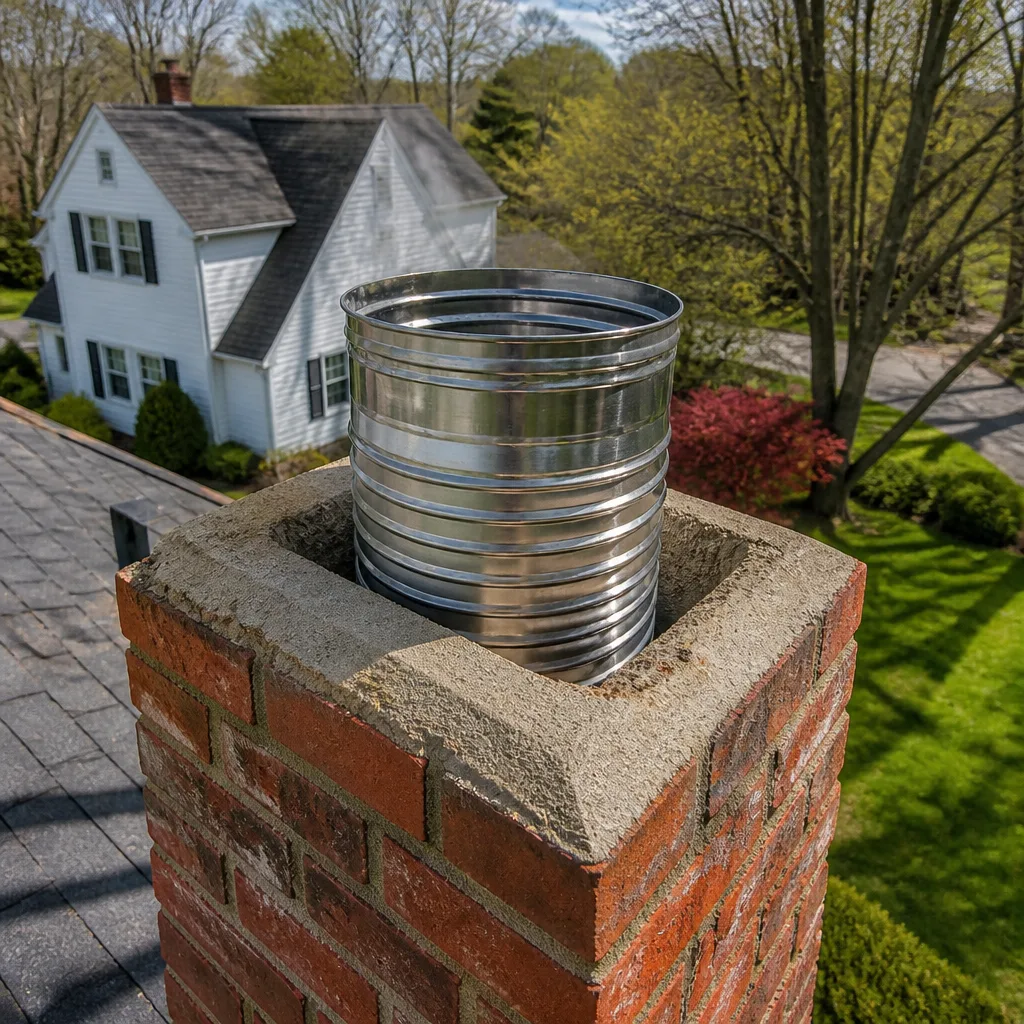 Flue relining
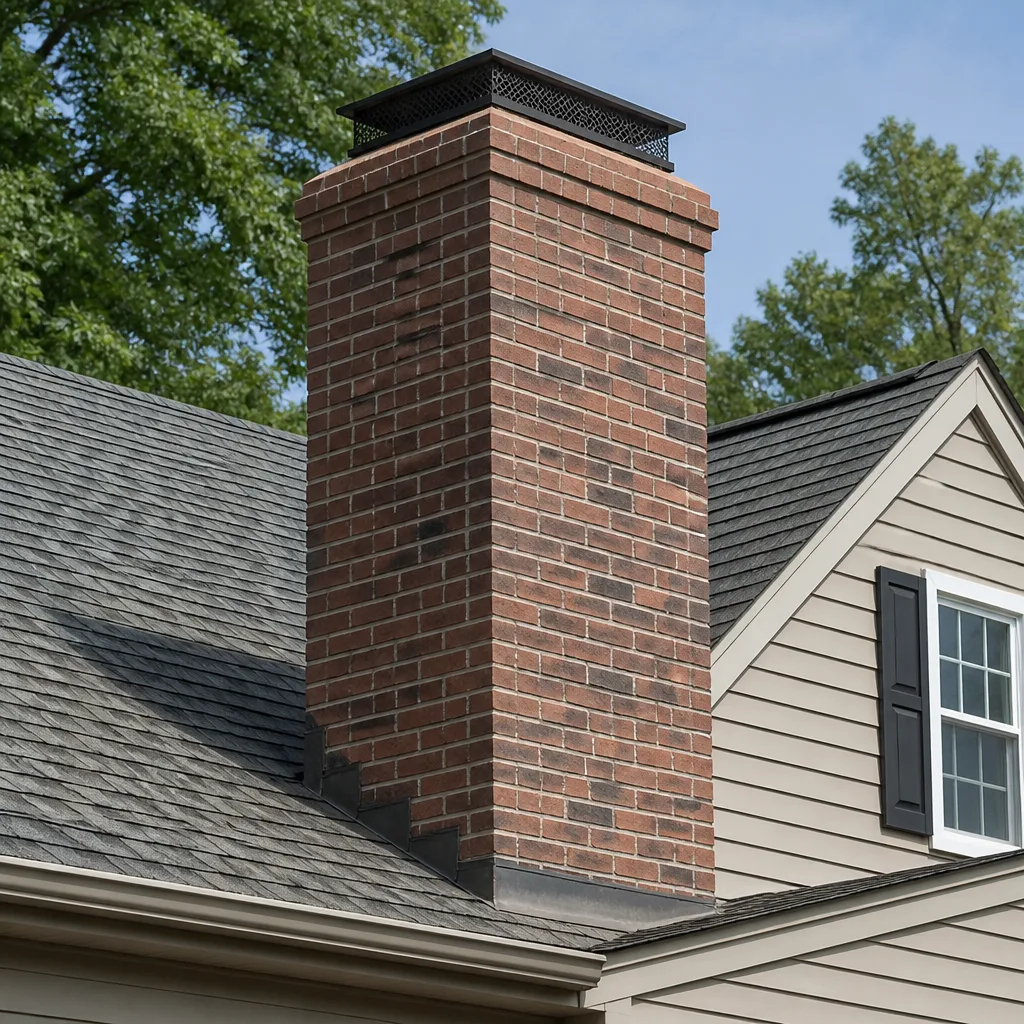 Masonry repair
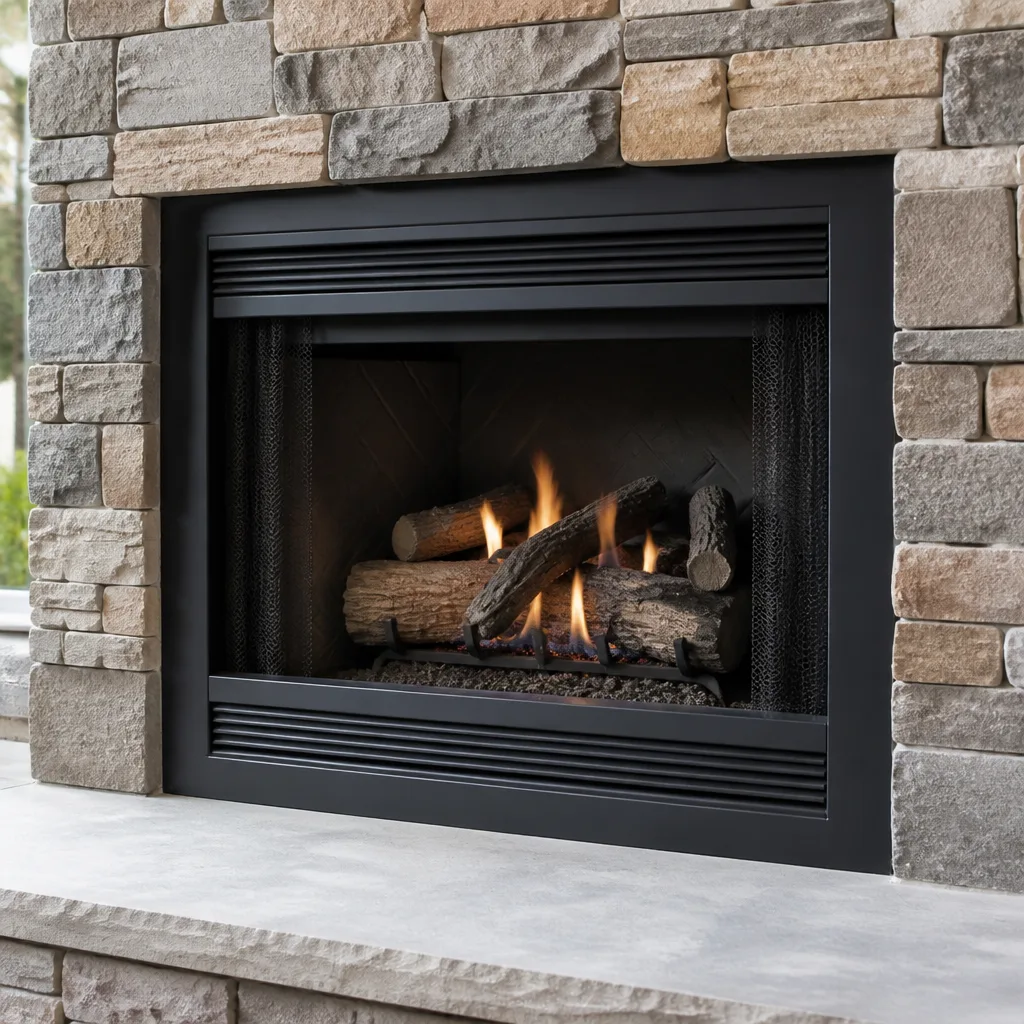 Gas fireplace service
Level 1 sweep and inspection to the NFPA 211 annual standard - flue, crown, cap, and flashing checked and photographed
Chimney sweep logs do not sweep chimneys. They loosen some creosote - which then falls where a brush and vacuum still have to collect it.
Chimney Sweep Maintenance Checklist for High Point Homeowners
Most chimney checklists tell you to sweep once a year and call it done. That’s the cleaning reminder, not the checklist. A cracked smoke chamber, a crown that’s pulling away from the flue, a cap that’s been dented flat by a fallen branch – none of these show up when you shine a flashlight up from the firebox opening. A fireplace can look perfectly normal from the hearth and still be sending combustion gases into the wall cavity behind it. What follows is a checklist organized the way an actual inspection works: by location, with pass/fail criteria you can apply yourself, and a clear line between what a High Point homeowner can check and what needs a trained eye and a camera.
Quick Answer
A sound chimney maintenance checklist for High Point covers five zones in order: the exterior crown and cap, the exterior masonry, the firebox interior, the damper, and the flue. Homeowners can handle visual checks on the first four, but flue integrity, smoke chamber condition, and hidden liner damage require a camera inspection from a chimney sweep. Time the full inspection for September, before heating season, and a moisture check for March, after it.
Styles & brands we work with
- Sweep & inspection
- Caps & crowns
- Flue relining
- Masonry repair
- Gas fireplace service
Table of Contents
- The Crown and Cap: Where Water Damage Starts
- Exterior Masonry: What to Look For on the Brick and Mortar
- The Firebox Interior: Reading the Brick and Joints
- The Damper: Homeowner-Serviceable, With Limits
- The Flue: Where the Camera Earns Its Keep
- Seasonal Timing for High Point’s Heating Year
- Homeowner-Serviceable vs. Professional-Only Items
- Common Mistakes to Avoid
The Crown and Cap: Where Water Damage Starts
The crown is the concrete slab on top of the chimney, and it’s the single most consequential thing you can check from the ground. Water is the slowest and most expensive chimney problem in High Point, and the crown is where most of it gets in. A crown that’s cracked, crumbling, or sitting flush against the flue instead of sloping away from it lets rain run down into the masonry, freeze in the joints over the winter, and work the brick loose from the inside.
Check the crown from the ground with binoculars, or from a ladder if you’re comfortable and the roof is safe. Here are the pass/fail criteria:
- Pass: The crown is intact, slopes visibly away from the flue, and the seal where it meets the flue is unbroken.
- Fail: Any crack wider than a hairline, any spalling or flaking concrete, or a crown that looks flat or slopes toward the flue instead of away.
The cap sits over the flue opening and does two jobs: it keeps rain, birds, and squirrels out, and it sparks. A cap that’s rusted through, bent, or missing is a fail. Loose caps are also a wind problem on High Point’s more exposed lots. We fit caps and venting covers using Gelco and Famco components, because a cap that doesn’t match the flue dimensions becomes a leak source of its own.
Crown and cap work is not a homeowner repair. If you find a failing crown, that becomes a chimney repair item on your list, and it’s the kind of thing that gets worse and more expensive the longer it sits.
Exterior Masonry: What to Look For on the Brick and Mortar
Walk the outside of the chimney from the ground and look up at the brick and mortar joints. This is a slow read, not a fast one. What you’re looking for is whether the masonry is still doing its job of keeping water out and holding the flue in place.
Here are the pass/fail criteria, in the order you should look:
- Mortar joints: Pass if the joints are full and firm. Fail if you can dig a joint out with a screwdriver, if it’s crumbly to the touch, or if the joints are receding into the brick.
- Brick faces: Pass if the brick surface is intact. Fail if you see spalling – brick faces flaking or popping off – which means water has been getting in and freezing.
- Chimney lean: Pass if the chimney is plumb. Fail if it visibly leans away from the house, which points to a foundation or footing problem that needs a professional look.
- Staining: Pass if the exterior is clean. Fail if you see white chalky staining (efflorescence) or dark streaks, which tell you water has been moving through the masonry.
One thing High Point homeowners ask about is the seasonal swing – humid summers followed by cold snaps – and whether that’s hard on exterior masonry. It is. Water that soaks into brick during a wet stretch expands when it freezes, and that cycle is what produces spalling and crumbling joints. If you see masonry failing, it’s a repair item, and the fix is masonry work, not a paint-over.
The Firebox Interior: Reading the Brick and Joints
With the fire fully out and the firebox cold, get a good light and look at the interior brick, the mortar joints, and the back wall. The firebox is where a fire does its visible damage, and it’s easy to read if you know what you’re looking at.
- Pass: The firebox brick is intact, the joints are full, and there’s no gap between the firebox and the surrounding masonry.
- Fail: Cracked firebox brick, missing or receded joints, or any place where the firebox has separated from the face of the fireplace.
The tricky part is that the firebox is directly below the smoke chamber and the flue, and you cannot see those from here. A firebox that looks perfect is not evidence that the chamber above it is intact. That’s the core reason a maintenance checklist has to include a camera inspection – the firebox view is the least informative view in the whole chimney.
The firebox is also where most High Point homeowners burn, and how you burn matters. A hot, fast fire with dry, seasoned wood produces less creosote than a smoldering fire with wet wood. The creosote that builds up on the firebox walls and the flue above it is the fuel for a chimney fire, and the annual sweep is what removes it before it can build up to a dangerous level.
If your firebox has failed brick or a separated joint, don’t burn until a professional has looked at it. Call Chimney Sweep High Point and we’ll assess it.
The Damper: Homeowner-Serviceable, With Limits
The damper is the one component on this list where you can do real maintenance yourself, with clear limits. The damper is the metal plate above the firebox that opens to let smoke out and closes to keep heat in when the fireplace isn’t in use. When it sticks, the usual cause is a dry, stiff hinge or a buildup of soot and creosote on the plate.
Here’s the homeowner-serviceable part, done with the fire out and the firebox cold:
- Open the damper fully and check that it moves through its whole range without binding.
- Look at the hinge and the plate for heavy soot or creosote buildup and brush off what you can reach.
- Apply a small amount of high-temperature lubricant to the hinge pivot, not the plate.
- Work the damper open and closed a few times to distribute it, then check that it seats flat when closed.
What you should not do is force a damper that won’t move, or take apart a damper assembly to “fix” it. A damper that’s stuck hard or that won’t close flat is a sign of a warped plate, a broken hinge, or a blockage above it, and those are professional items. Also, if the damper won’t close, you’re losing heat up the chimney all winter, which shows up on your energy bill and is worth fixing.
A damper that opens and closes is not a substitute for a clean flue, though. The damper only controls airflow; the flue is what carries the exhaust, and a clean, sound flue is the whole point of the annual sweep.
The Flue: Where the Camera Earns Its Keep
The flue is the thing you can’t evaluate by eye, and it’s the reason a proper annual chimney sweep is not just a cleaning. A camera run down the flue shows you the actual condition of the liner, the smoke chamber, and the joints that sit between the firebox and the top of the chimney – and that’s the part generic checklists skip entirely.
Here’s what a camera inspection evaluates, with pass/fail criteria:
- Liner integrity: Pass if the liner is continuous and unbroken. Fail if there are cracks, gaps, or missing sections, which allow heat and gases to reach the surrounding masonry.
- Smoke chamber: Pass if the chamber walls are intact and the slope is smooth. Fail if the chamber is cracked or has separated from the flue, which is the failure mode that lets gases escape behind the firebox.
- Flue joints: Pass if the joints are tight and filled. Fail if there are visible gaps, especially at transitions between flue sections.
- Creosote level: Pass if buildup is light. Fail if glazed or heavy creosote has coated the liner, which raises the fire risk and calls for a sweep before the next burn.
A damaged liner has two consequences. It can let heat and combustion gases through the chimney wall, and it can let carbon monoxide back into the house. That’s the safety case for the camera inspection, and it’s why we don’t rely on the firebox view alone.
When the liner has failed, there are two paths. A full reliner using a DuraFlex flexible liner system restores the flue from the inside, and HeatShield resurfacing can restore flue integrity without a full reliner replacement in the right conditions. Which one fits your chimney depends on the camera findings, and the findings should be the thing that decides it, not a hunch.
Seasonal Timing for High Point’s Heating Year
Timing matters because a chimney inspection is most useful before you need the fireplace and after the season has put it through its paces. Here’s how we’d schedule the checklist across the year:
- September – pre-season inspection and sweep. Do the full checklist and the camera inspection before you light the first fire. This is when a failed liner, a damaged crown, or heavy creosote gets found and fixed before it matters.
- During the season – monthly visual checks. A quick look at the firebox, the damper, and the exterior at the start of each month catches new cracks early. Schedule a sweep based on how much you burn, not the calendar alone.
- March – post-season moisture check. The end of heating season is when the freeze-thaw damage from winter is most visible. Look at the exterior masonry and the crown for new spalling or staining, and get any failures on the repair list before they get worse through the wet spring.
- Before any burn after a long idle period. If the fireplace has sat unused, do the checklist before lighting, because a chimney that was fine last winter may have taken on damage over the summer.
High Point’s climate puts real stress on a chimney across those seasons, with humid summers and cold snaps that drive water into the masonry. The two bookend checks – September and March – are what catch the changes before they become repairs. If you’d rather not schedule the checklist yourself, call us and we’ll set a visit.
Homeowner-Serviceable vs. Professional-Only Items
One of the reasons generic chimney checklists fail homeowners is that they don’t say what you can actually do versus what you should leave alone. Here’s the line:
- Homeowner-serviceable: Exterior visual checks (crown, cap, brick, joints), firebox visual checks, damper lubrication and light soot removal, and the monthly walk-around during heating season.
- Professional-only: Flue camera inspection, liner integrity assessment, smoke chamber evaluation, crown and cap replacement, masonry repair, relining, and any work that requires going onto the roof.
The dividing line isn’t about difficulty – it’s about risk. High-tension springs are not part of a chimney, but the same principle applies to roof access and to any work inside the flue: these are the places where a trained technician with the right equipment and a real look at the inside of the system is the only way to get an accurate answer. A visual check from the ground and a camera inspection from the top are not the same thing, and the checklist is only as good as the weakest check on it.
For the professional side of the checklist, we handle chimney repair and relining as well as the dryer vent cleaning that most homeowners never think to schedule. That second one deserves its own line on your maintenance calendar, because a clogged dryer vent is a fire risk that builds up quietly behind the appliance. We use Olympia Chimney and Copperfield components for the venting side, and Gelco and Famco for caps and covers, so the fit is right rather than improvised.
Common Mistakes to Avoid
- Treating the annual sweep as the whole checklist. A sweep cleans the flue; it doesn’t tell you the condition of the crown, the masonry, or the liner unless those are inspected. Ask for the camera inspection, not just the brush.
- Skipping the exterior because the fire burns fine. A fireplace can work perfectly while the crown is failing, and the water damage moves faster than the fire problem. Look up at the outside of the chimney at least once between seasons.
- Forcing a stuck damper. A damper that won’t move is telling you something. Forcing it bends the plate or breaks the hinge and turns a simple fix into a repair.
- Burning wet or green wood. Wet wood produces more creosote, and creosote is what makes a chimney fire dangerous. Season your firewood and keep it covered.
- Ignoring the March check. Post-winter moisture damage is most visible in early spring, and catching it before the wet season is cheaper than catching it after.
- Putting off a failing crown in High Point’s freeze-thaw. A cracked crown lets water in, and every freeze pushes that crack wider. What starts as a crown repair can become a masonry rebuild.
- Forgetting the dryer vent. The dryer vent is on the same list and is the same safety category, and it’s the one most homeowners never check. Add it to the annual calendar.
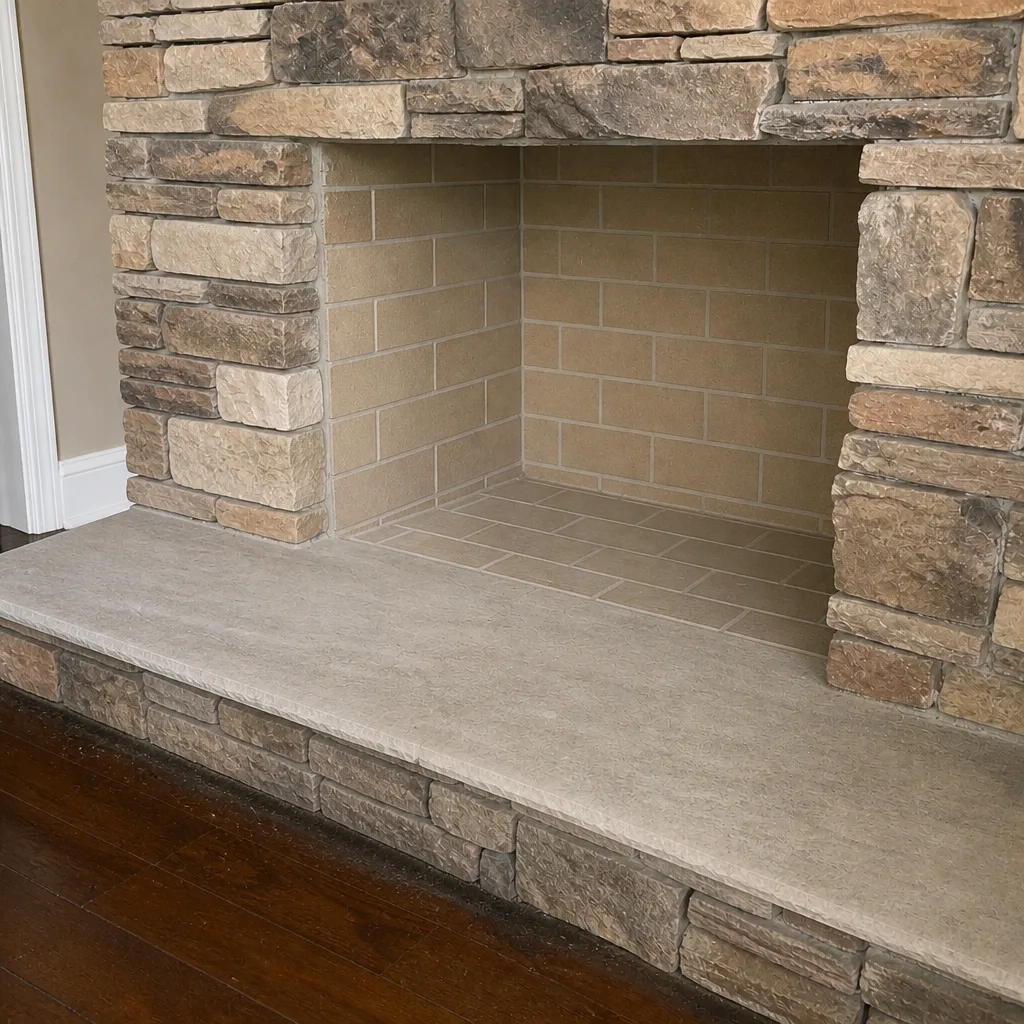
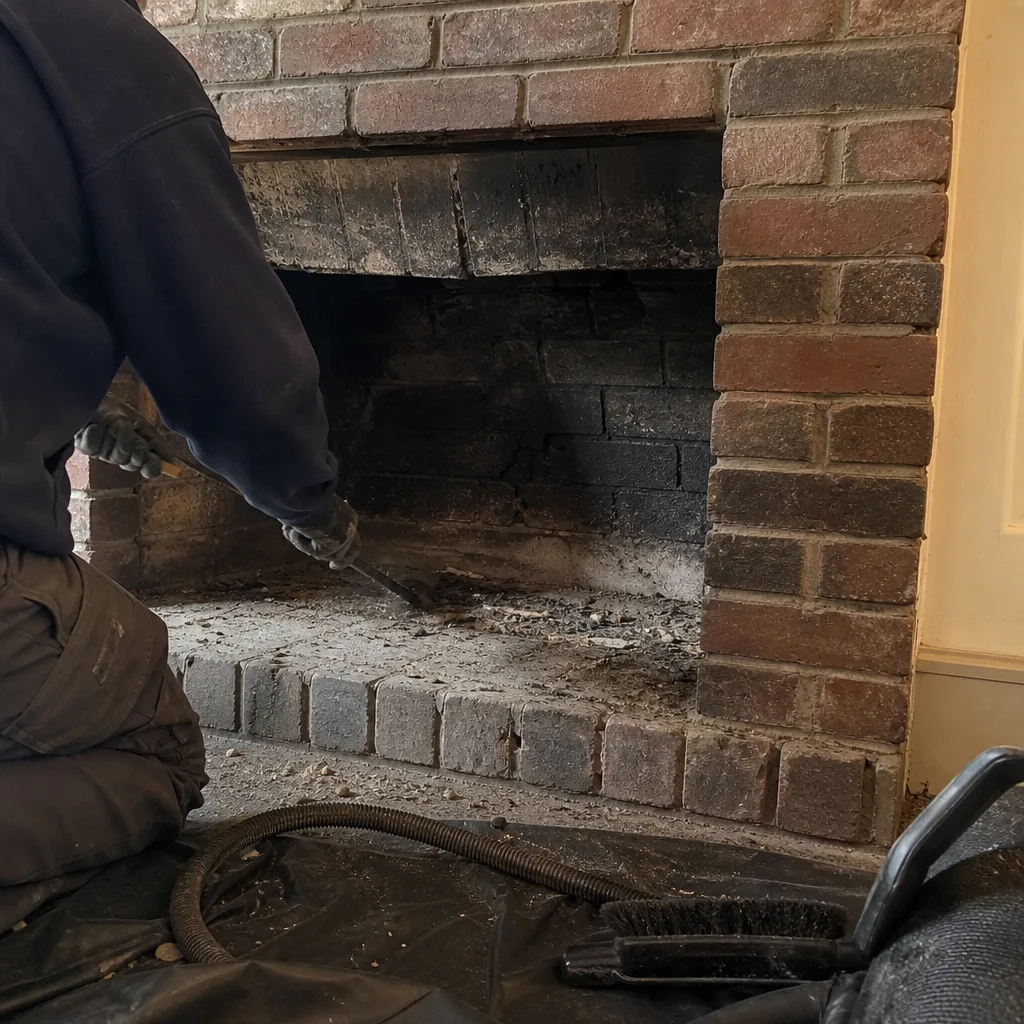
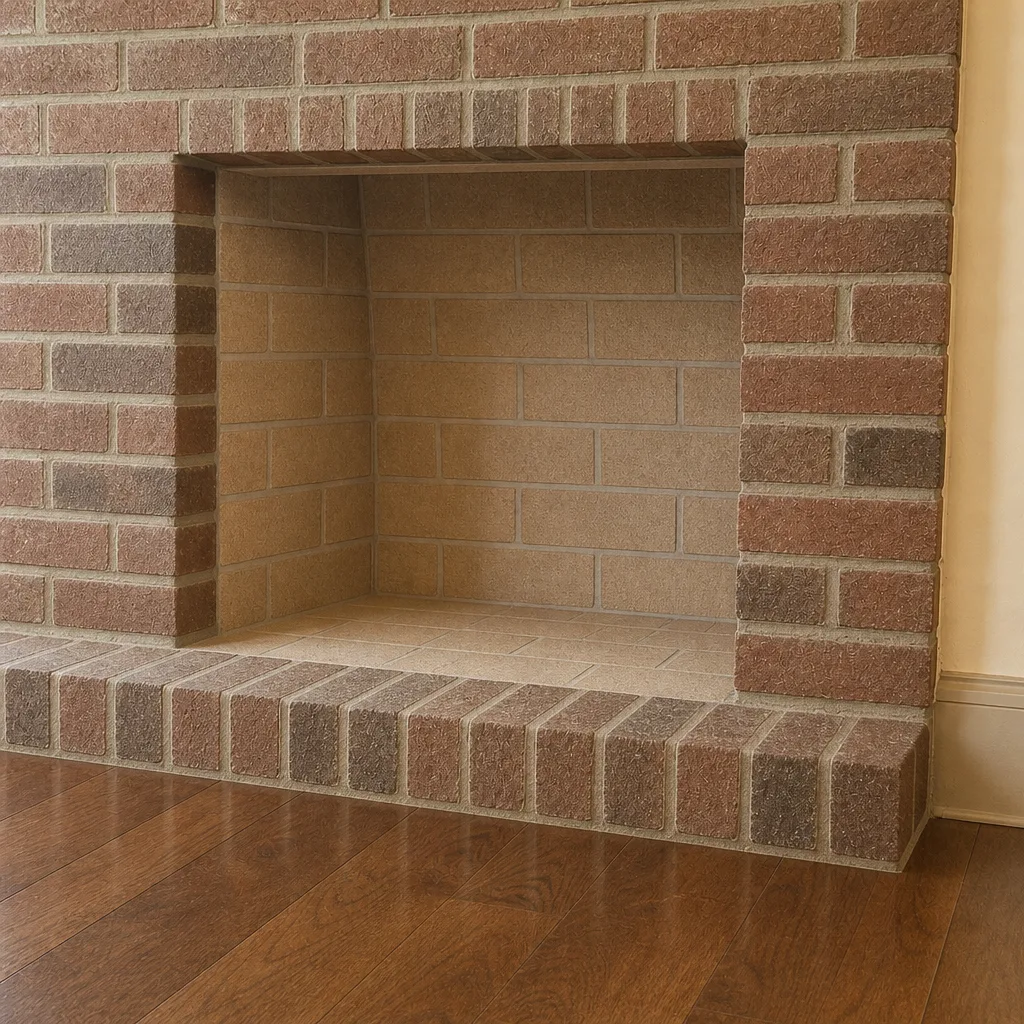
See the difference
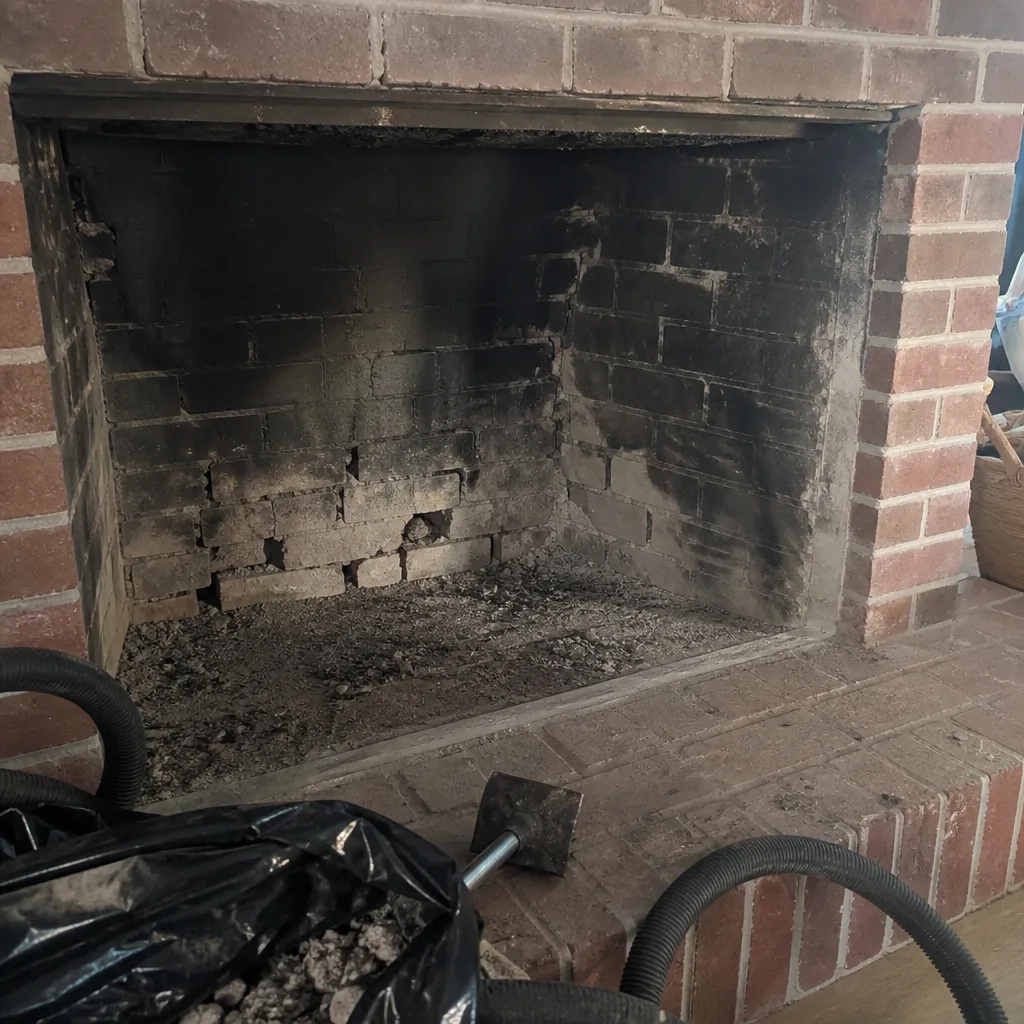 Before
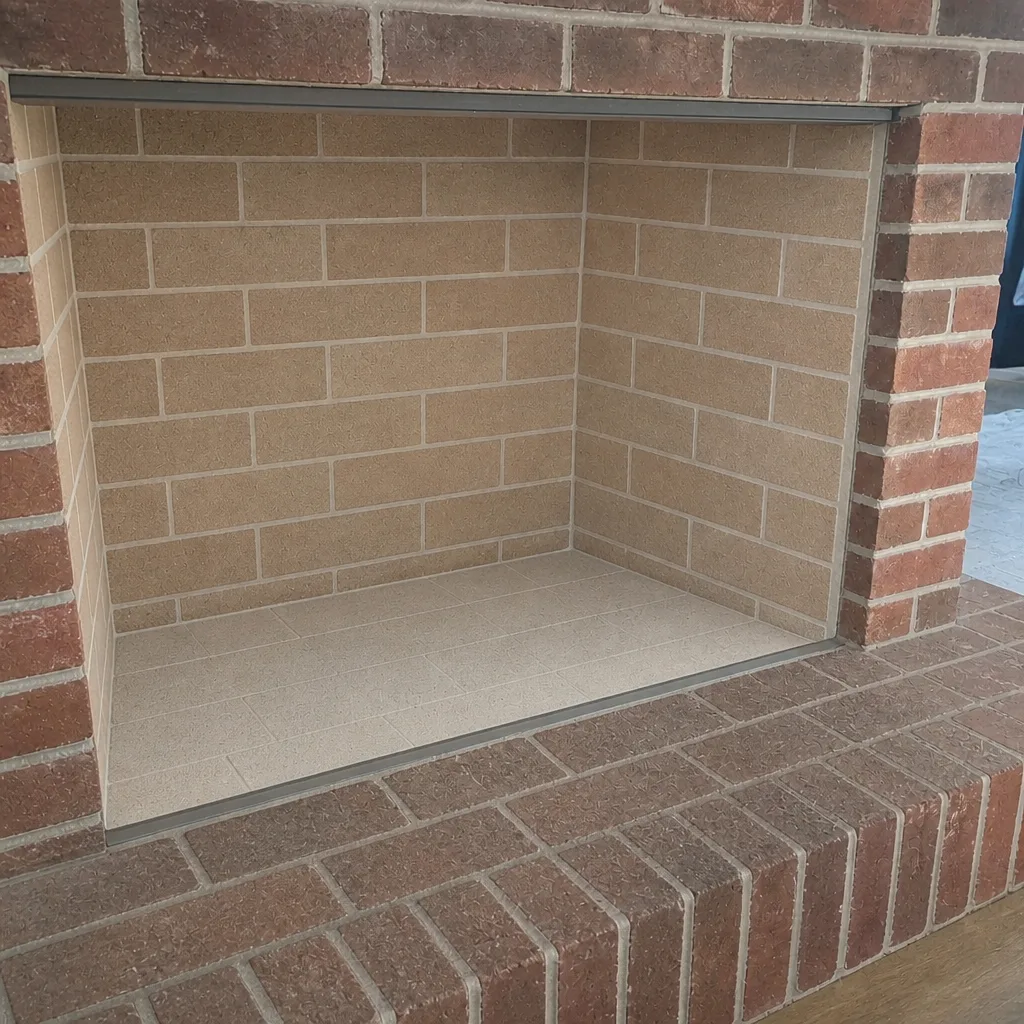 After
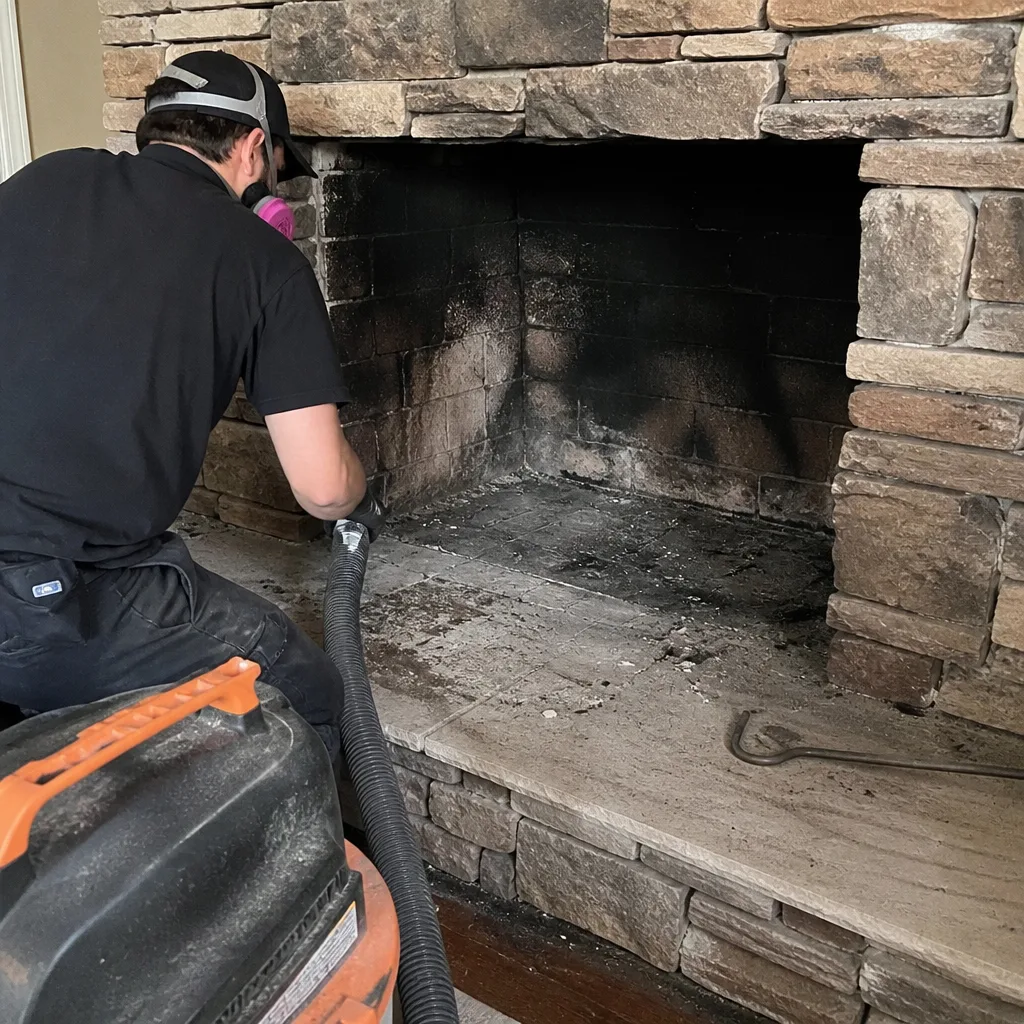 Before
 After
 Before
 After
When to Call a Professional
Call a professional when any of these appear on your checklist: a cracked or spalling crown, a rusted or missing cap, cracked firebox brick or separated joints, a damper that won’t close flat, visible creosote glazing on the liner, or any exterior masonry failure. Also call if it’s been more than a year since the flue was inspected, if you’ve had a chimney fire, if you see staining or smoke escaping anywhere other than the chimney top, or if you’ve never had a camera inspection. Any of these is a reason to get the inside of the chimney looked at properly. Chimney Sweep High Point offers free estimates in High Point – call (877) 798-3391.
Frequently Asked Questions
A complete checklist covers the exterior crown and cap, the exterior masonry, the firebox interior, the damper, and the flue. The first four can be checked visually by a homeowner; the flue requires a camera inspection by a sweep. Schedule the full checklist for September, before the heating season, and repeat the exterior and moisture checks in March.
Most homes should be swept and inspected once a year, and more often if you burn heavily or notice heavy creosote buildup. The camera inspection is the part that should not be skipped, because the firebox view alone won’t show a failing liner or smoke chamber. Call (877) 798-3391 for an exact quote – estimates are free.
You can and should check the exterior crown, cap, brick, joints, firebox, and damper yourself using the pass/fail criteria above. You cannot evaluate the flue, the smoke chamber, or the liner without a camera, and those are the checks where a professional is required. A homeowner checklist and a professional inspection cover different parts of the same system.
A failing crown shows cracks wider than a hairline, spalling or flaking concrete, or a surface that slopes toward the flue instead of away from it. Any of those lets water into the masonry, and in High Point’s freeze-thaw cycle that water causes the damage to spread. A crown in that condition is a repair item and should be fixed before the next heating season.
The smoke chamber sits above the firebox and below the flue, and it’s the part of the chimney you cannot see from the firebox opening. A cracked or separated smoke chamber lets combustion gases escape into the wall cavity even while the fireplace burns normally. Only a camera inspection can confirm the chamber is intact, which is why it’s on the professional side of the checklist.
Not necessarily. A failing liner needs one of two fixes: a full reliner with a DuraFlex flexible liner system, or HeatShield resurfacing that restores flue integrity without a full replacement when the condition allows it. The camera findings should decide which path fits, and we show you what the camera sees so you can judge it yourself. Call (877) 798-3391 for an exact quote – estimates are free.
The Bottom Line
A chimney maintenance checklist is a diagnostic sequence, not a cleaning reminder. The five zones – crown and cap, exterior masonry, firebox, damper, and flue – each have pass/fail criteria, and the flue is the one you can’t see without a camera. Time the full inspection for September before heating season and the moisture check for March after it, handle the damper and visual checks yourself, and bring in a professional for the flue, the smoke chamber, the liner, and any structural repair. If you’d like the professional half of this checklist done on your High Point home, we can help.
Contact
Call (877) 798-3391 for a free estimate. We answer 24/7. Fast dispatch from 7am to 7pm, Sunday through Friday, serving homeowners throughout High Point and the surrounding area.
Written by the team at Chimney Sweep High Point.